
Why does my car battery die in cold weather?
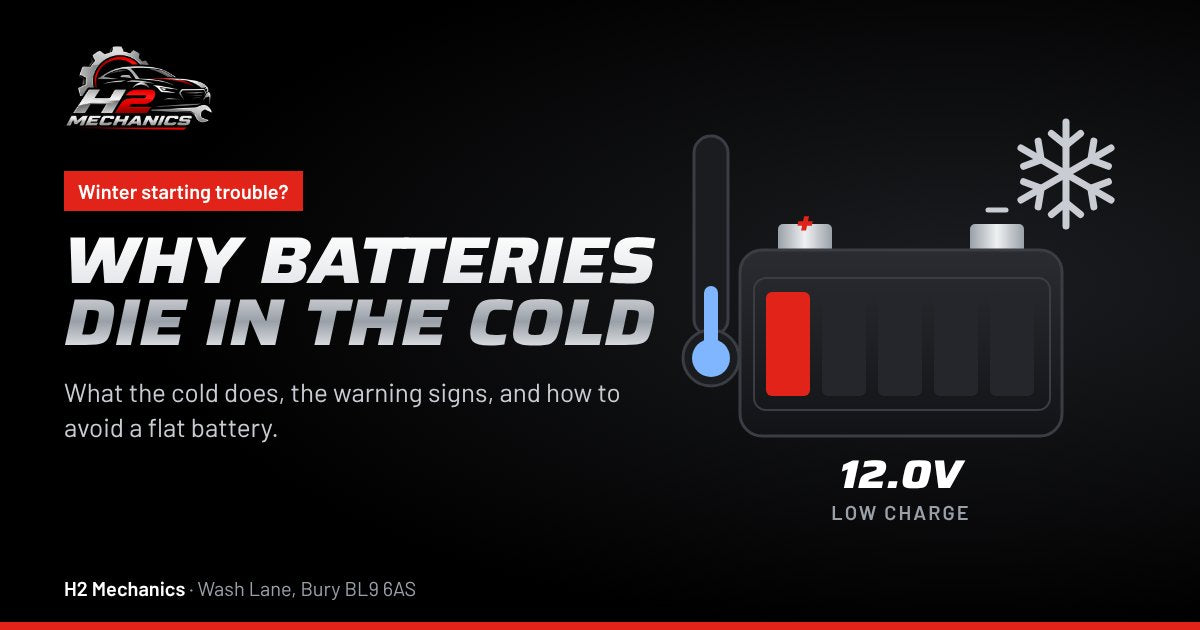
Quick answer: a car battery dies in cold weather because low temperatures slow the chemical reaction inside it, so it can deliver less power just when the engine needs more to start. Cold engine oil is thicker, winter driving uses more electrics, and short trips don't give the battery time to recharge. A battery that was already weak or ageing is usually the first to fail on a frosty morning.
The first cold snap of the year is when a lot of drivers find out their battery isn't as healthy as they thought. Here's what the cold actually does, the warning signs to look for, and the simple things that make a flat battery much less likely this winter.

Why the cold is hard on a car battery
A standard 12V car battery makes electricity through a chemical reaction. When it's cold, that reaction slows down, so the battery can't deliver as much current as it can on a mild day. At the same time, several things ask more of it:
- Thicker oil: cold engine oil is stiffer, so the starter motor needs more effort to turn the engine over.
- More electrics: the heater fan, heated rear screen, heated seats, headlights and wipers all draw power, often at the same time.
- Short journeys: starting the engine takes a lot of charge, and a ten-minute trip may not be long enough for the alternator to put it back.
- Age: batteries lose capacity over time. A battery that coped in summer may not have enough left for a cold start.
Warning signs your battery is struggling
Batteries rarely fail without any warning. Look out for:
- Slow cranking: the engine turns over sluggishly before it starts, especially first thing in the morning.
- Clicking when you turn the key: often a sign there isn't enough power to turn the starter.
- Dim lights or a flickering dashboard while starting.
- The battery warning light staying on after the engine has started. This can point to a charging problem rather than the battery itself.
- Stop-start not working: many cars disable stop-start when the battery charge is low.
- Needing a jump start more than once. That usually means the battery isn't holding charge, or something is draining it.
How to check your battery's voltage
If you have a simple multimeter, you can get a rough idea of your battery's health at home. Check it with the engine off, ideally after the car has been parked for a few hours. As a guide for a standard 12V battery:
- 12.6V or more: fully charged.
- Around 12.4V: about three-quarters charged. A longer drive should top it up.
- Around 12.2V: about half charged. Charge it soon, as cold starts are at risk.
- 12.0V or less: low or flat. It needs charging and a proper test, and it may need replacing.
A voltage reading only shows charge, not how much power the battery can deliver under load. A battery can show a healthy voltage and still fail on a cold morning, which is why a load test is more reliable.
How to avoid a flat battery this winter
- Take a longer drive once a week: 30 minutes or so at steady speeds gives the alternator time to recharge the battery.
- Switch things off before you turn off the engine: lights, heater fan and heated screens, so they don't load the battery at the next start.
- Use a smart charger if the car sits unused for long spells or only does short trips.
- Keep the terminals clean and tight: corrosion or a loose clamp can stop the battery charging properly.
- Know its age: many batteries last around four to six years, though it varies with the car and how it's used. If yours is getting on, have it tested before winter rather than after it fails.
Stop-start cars and modern batteries
Cars with stop-start usually use a stronger EFB or AGM battery, and the replacement should match the original type. Some cars also need the new battery registering with the car's computer so the charging system manages it correctly. It's worth checking your handbook, or asking us, before buying a battery online.
When to book a battery check
If your car is slow to start, has needed a jump, or the battery is more than a few years old, get it checked before the coldest weeks arrive. Our free car health check covers the basics, and our battery and electrical service tests the battery, alternator and charging system properly. Tell us the symptoms and we'll call you with a price.
If the battery keeps going flat even though it tests fine, something may be draining it while the car is parked. A car diagnostic (£100) helps track down electrical faults like this. Whatever we find, we tell you what's wrong and the price before any work starts.
For the rest of your pre-winter checks, see our winter car checklist. We help drivers across Bury and nearby, including Tottington and Whitefield, with early and late drop-off available.
Car battery in cold weather: common questions
Why does my car battery die in cold weather?
Cold slows the chemical reaction inside the battery, so it can deliver less power, while thick cold oil makes the engine harder to turn over. A weak or older battery often doesn't have enough in reserve to cope.
How long does a car battery last?
Many car batteries last around four to six years, but it varies with the car, the battery type and how the car is used. Lots of short trips tend to shorten battery life.
Will driving my car charge the battery?
Yes, the alternator charges the battery while the engine runs, but short trips may not put back what starting the engine used. A longer drive of around 30 minutes helps, and a smart charger is better if the battery is very low.
Is it the battery or the alternator?
If the car starts after a jump but goes flat again quickly, or the battery warning light stays on while driving, the alternator or charging system may be at fault. A proper test of both will tell you which.
Can I replace a car battery myself?
On some older cars it's straightforward, but many modern cars, especially those with stop-start, need a specific battery type and may need it registering with the car's computer. Check your handbook, or have a garage fit and set it up.
Need a hand with your car?