
Signs you need new brake pads or discs
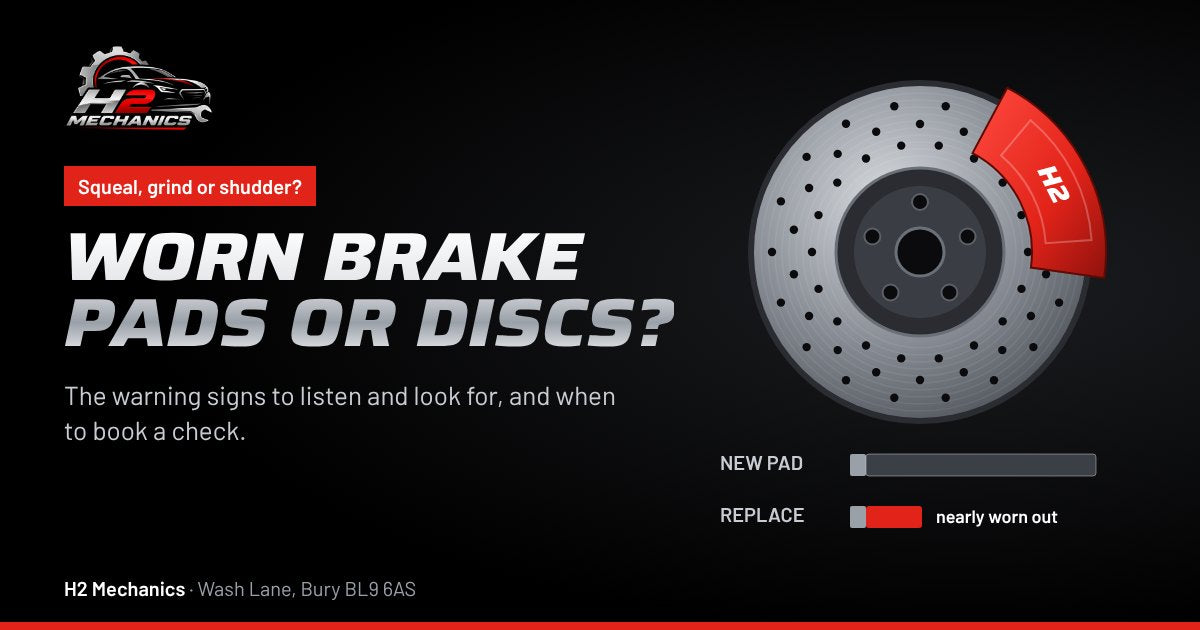
Quick answer: the most common signs of worn brake pads are a high-pitched squeal when you brake, a grinding or scraping noise, the car taking longer to stop, and a brake warning light on the dashboard. Worn or damaged brake discs usually show up as a vibration through the pedal or steering wheel, or a visible lip and deep grooves on the disc. If you hear grinding or the pedal feels soft, stop driving and get the brakes checked straight away.
Brake pads and discs wear every time you slow down, so replacing them is normal maintenance rather than a sign that something has gone wrong. Catching the wear early can stop a pad change turning into new discs as well.

Sounds that mean your brake pads are wearing out
Your ears are often the first warning. Many pads have a small metal tab, called a wear indicator, that starts to touch the disc when the pad gets thin.
- High-pitched squeal: a steady squeal or squeak each time you brake is often the wear indicator doing its job. It means the pads are getting low and should be checked soon.
- Grinding or scraping: a harsh, metallic grinding usually means the friction material has gone and the metal backing plate is rubbing on the disc. This damages the disc quickly and reduces your braking, so don't keep driving on it.
- A squeak first thing in the morning: a brief squeak on the first few stops after rain or a cold night is often just surface rust on the discs being wiped off. If it goes away after a few stops, it's usually nothing to worry about.
What you might feel through the pedal or steering
- Vibration or judder when braking: this usually points to discs that have worn unevenly or "warped". You may feel it through the pedal, or as a shake in the steering wheel when braking from higher speeds.
- Pulling to one side: if the car drifts left or right only when you brake, a caliper may be sticking or one side may be wearing faster than the other. If it pulls all the time, the cause may be tyres or alignment instead.
- Soft, spongy or sinking pedal: this is less about pads and more about the hydraulics, such as air in the system, old fluid or a leak. Treat it as urgent.
- Taking longer to stop: worn pads and glazed or worn discs both reduce grip. It creeps up slowly, so you may not notice until you need to stop hard.
Warning lights and other clues
Some cars have an electronic pad wear sensor that switches on a light on the dashboard when the pads are low. The red brake warning light can also mean low brake fluid or that the handbrake is still on, so check your handbook for what each light means on your car. Our guide to dashboard warning lights explains which ones mean stop now.
Other clues include a burning smell after normal driving, which can point to a sticking caliper, or one wheel noticeably dirtier with brake dust than the others.
How to check your brake pads and discs at home
You can do a quick visual check without taking anything apart. On many cars with open alloy wheels you can see the disc and the edge of the pad through the spokes.
- Park on level ground with the handbrake on and let the brakes cool down.
- Look through the wheel at the pad pressed against the disc. New pads typically have around 10 to 12mm of friction material. If it looks only a few millimetres thick, book a check. Many garages recommend replacing pads at around 3mm, but check your handbook.
- Look at the disc surface. Light, even marks are normal. Deep grooves, a raised lip around the outer edge or a blue tint from overheating mean the disc may need replacing.
- Run a finger carefully along the outer edge of the disc, only when it's cold. A noticeable step or lip shows how much the disc has worn.
Discs also have a minimum thickness set by the manufacturer, usually stamped on the disc itself. That needs measuring with the wheel off, which is part of any proper brake inspection.
Pads or discs: which needs replacing?
- Pads: wear faster and are replaced more often. How long they last depends heavily on how and where you drive. Town driving and hilly routes wear them quicker than motorway miles.
- Discs: last longer, but often need replacing every second pad change or so. Fitting new pads to badly worn discs can mean poor braking and noise.
- Always in pairs: pads and discs are replaced across the whole axle, both front or both rear, so the car brakes evenly.
- Rear brakes: some cars still use drum brakes at the back, which wear more slowly and are checked in a different way.
Worn brakes are also one of the more common MOT problems. Badly worn pads or discs are a fail, and very thin pads can be marked as a dangerous defect. Our guide to common MOT failures covers what else testers look for.
Is it safe to drive with worn brakes?
It depends on the symptom. A squealing wear indicator is a warning to book in soon, not to stop on the spot. Grinding, a spongy or sinking pedal, or a red brake warning light that stays on are different: brakes in that state may not stop you in time. Pull over when it's safe and call us for advice rather than driving further.
When to book and how we can help
If you've noticed any of the signs above, book a brake service, from £80. We inspect the pads, discs, calipers, fluid and hoses, measure the wear and show you what we find. If a warning light is on and the cause isn't clear, a car diagnostic (£100) reads the fault codes. If you're not sure anything is wrong, our free car health check includes a brake check alongside tyres, fluids and lights. If the car pulls even when you're not braking, we can look at steering and suspension too.
Whatever we find, we tell you what's wrong and the price before any work starts. All our work comes with a 12-month / 12,000-mile warranty on parts and labour.
We look after drivers across Bury and nearby, including Tottington and Whitefield.
Worn brakes: common questions
How do I know if my brake pads need replacing?
Common signs are a squeal when braking, a grinding noise, longer stopping distances and a pad wear warning light. You can also look through the wheel spokes: if the pad material looks only a few millimetres thick, get it checked.
What does it mean if my brakes are grinding?
Grinding usually means the pads have worn down to the metal backing and are rubbing on the disc. Stop driving as soon as it's safe and get the brakes inspected, as it damages the discs and reduces braking.
Why does my steering wheel shake when I brake?
A shake or judder through the steering wheel or pedal under braking usually means the front discs have worn unevenly or warped. New discs, and usually new pads with them, normally cure it.
Do brake pads and discs need replacing at the same time?
Not always. Pads wear faster, so discs often last two sets of pads, but if the discs are below their minimum thickness or badly scored, they should be replaced with the pads.
How much does a brake service cost at H2 Mechanics?
Our brake service starts from £80. We check the pads, discs, calipers and fluid, then tell you what's needed and the price before any work starts.
Need a hand with your car?